From Android to Linux — The x10 Switch
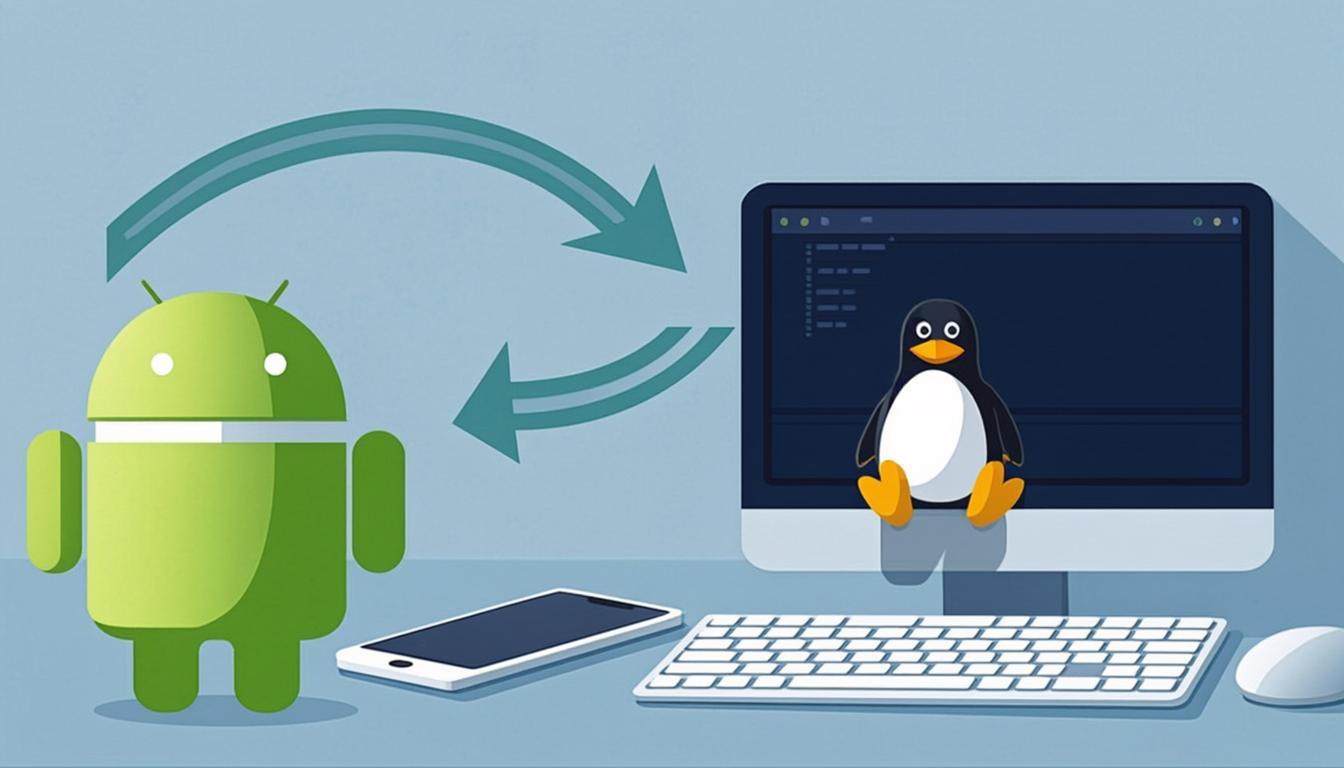
DXN1 Studios was built on a phone. Not as a metaphor — literally. Every repository in our history, every announcement on this page, the community, the website you are reading right now: written, debugged and shipped from an Android screen. That era is over. The studio now runs on a proper Linux PC, and everything we ship from today is measured against a new bar: ten times the quality.
The phone era, honestly told
When DXN1 started — one person, a phone and a work ethic — a computer was not an option. So it was never an excuse. The DXN1-termux account in our GitHub org is the receipt: entire projects were coded in a terminal emulator on Android, over mobile hotspots, on cracked screens, at 3am. SoundLink, the DarkWebScraper Pro family, a community of thousands, the academy — all of it came out of a pocket. The origin story on this site is not embellished; if anything it is undersold.
That chapter taught us things a comfortable setup never would have: ruthless scoping, zero tolerance for bloat, and how to ship when resources are at their absolute minimum. Those instincts stay with us. But they were instincts forged under constraint — and constraint is a terrible place to build from forever.
The switch
As of today, the studio's daily driver is a Linux PC. A real keyboard. A real screen. A real toolchain — native compilers, containers, CI that does not time out on a cellular connection. The gap between "how we work" and "what we build for" is finally closed: our newest focus is Linux applications, TUI tools and AI-powered tooling, and now the studio itself lives inside that world. We dogfood our own platform, because it is the only platform we use.
Why Linux was never really a choice
Look at what the studio actually makes right now. Sonderr is a terminal-native coding agent. NeuralShell is a shell wrapper. The next wave of projects is Linux-first by definition. Building terminal tools from a phone meant always testing on the target with one hand tied behind our back. Building them on Linux means the dev machine and the deployment target are the same species — fewer surprises, faster iteration, and the kind of deep debugging you simply cannot do over SSH from a hotspot.
What x10 quality means in practice
The phone era shipped fast because it had to. The Linux era ships right because it finally can. Concretely: larger refactors with real test coverage instead of careful patches; proper CI on every push instead of "works on my phone"; desktop-grade profiling instead of guessing; and projects that get the polish pass they deserve before launch instead of after. Sonderr — self-updating, monorepo, typed end-to-end, MIT — is the first product of this era. It will not be the last. The roadmap is about to get a lot more interesting.
What changes for you
Nothing breaks. Same accounts, same support lines, academy stays free as always. What you will notice is velocity and finish: more releases, bigger features, fewer rough edges. If you have been watching DXN1 from the sidelines, this is the moment to stop watching. The phone built the company. Linux builds the catalog.